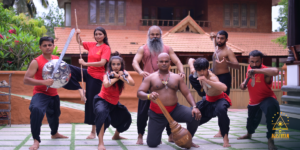
When I stand inside a Kalari and watch a young student take his first steps, I often think about the extraordinary journey this art has travelled.
The movements we practise today have passed through generations. There was a time when these movements were practised by warriors preparing for battle, close to the centres of power in Kerala. There was also a time when the art went through a period of decline and survived quietly through teachers and families. Today, we see kalaripayattu in films, on stages, in modern training studios, schools, universities, and online.
From the battlefield to the modern studio, from the sword to the screen, and from the traditional Kalari to the digital world, this is the journey of an ancient martial art.
The Roots of the World's Oldest Martial Tradition
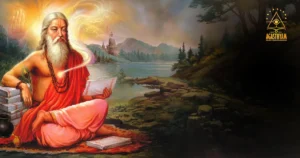
Kalaripayattu is often described as the world’s oldest martial art, with a traditional history that reaches back thousands of years. The exact historical date of its origin is difficult to establish, as it evolved organically through generations rather than springing from a single creator.
For me, this is important: we should respect our traditional knowledge without turning history into mythology, and we should study history without losing the spirit of the tradition.
The Kalari was never simply a place where people learned to fight. It was a complete school of education. The student learned how to move, breathe, fall, rise, use weapons, understand the human body, and, most importantly, control the mind. The Guru was not simply a physical trainer; the Guru was a living repository who carried the knowledge and passed it to the next generation.
From Warfare to Cultural Heritage
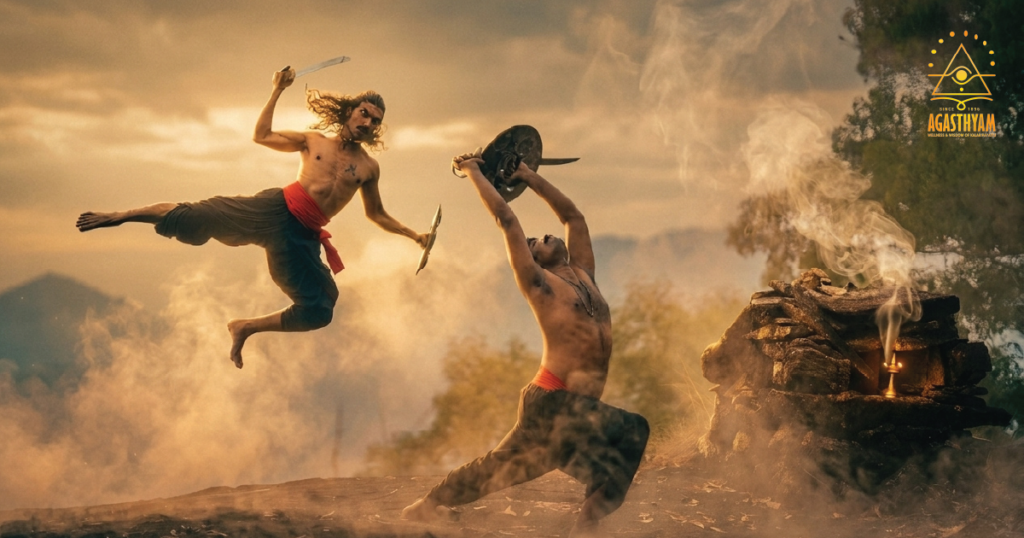
History is filled with stories of Kerala’s warriors, rulers, and battles. In eras past, local chieftains required trained soldiers, and the Kalari served as the primary training ground.
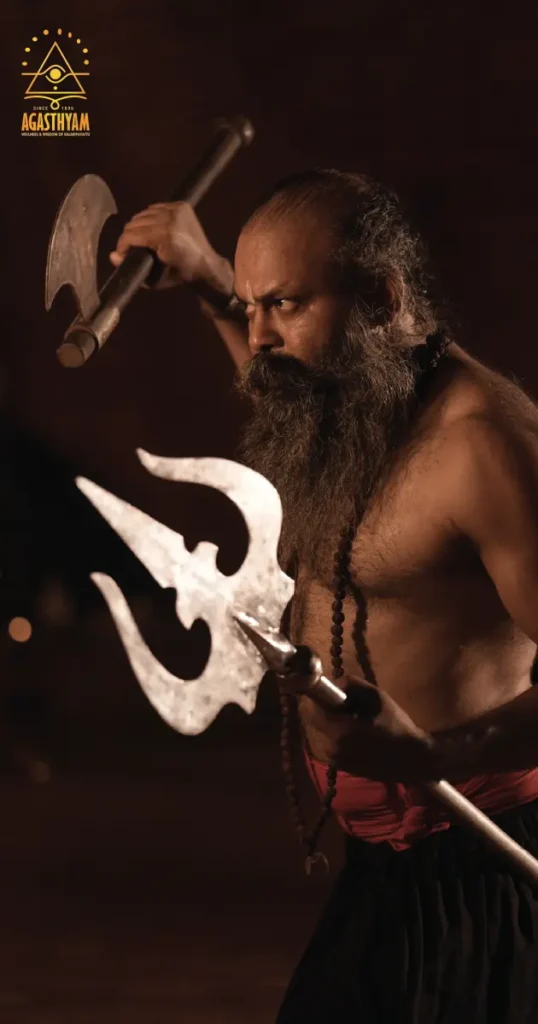
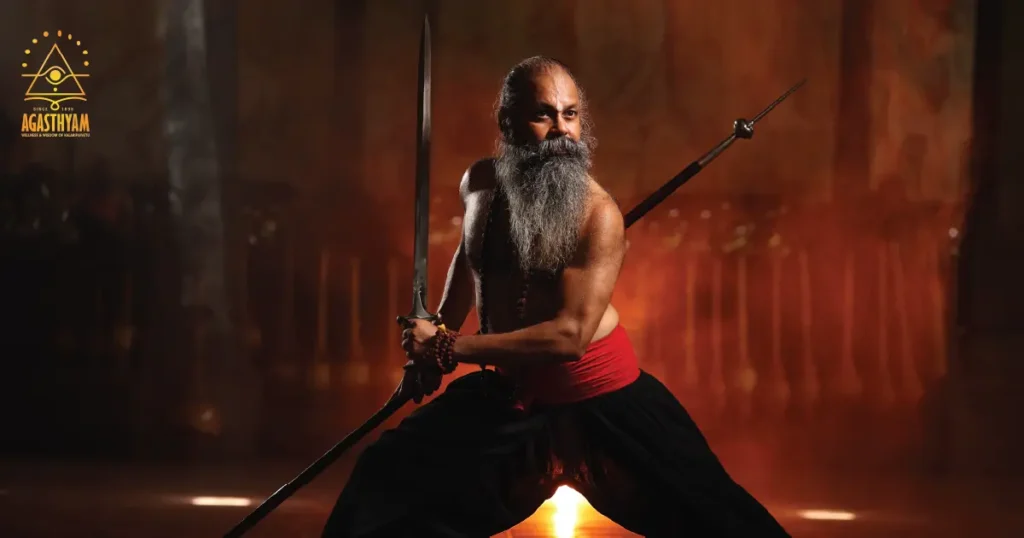
Students began with the foundation of the body, building strength, flexibility, balance, speed, coordination, and endurance, before advancing to weapons like the shield and sword, spear, staff, and flexible blades. Behind every weapon was one primary principle: control.
Moreover, martial training and healing were never separate. Through traditional Marma knowledge, practitioners learned not only how vulnerabilities work in combat, but how to protect, treat, and restore the human body.
When warfare changed with the introduction of firearms and colonial restrictions, public practice declined. Yet, the art survived because Gurus and families quietly protected their lineages.
The Evolution: Stages, Cinema, and Modern Studios
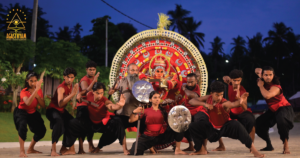
As cultural awareness grew in the twentieth century, Kalaripayattu returned to public life. Its stunning movements naturally transitioned from battlefields to the stage, captivating audiences through storytelling, acrobatics, and dramatic physical expression.
Then came cinema, which brought images of Indian martial traditions to global audiences who might never have stepped inside a traditional Kalari. While cinema inspires interest, a choreographed fight sequence cannot replace years of disciplined practice under a Kalari Gurukkal.
Today, Kalaripayattu is entering an exciting new chapter. Whether you are looking for kalaripayattu for beginners, structured kalaripayattu classes, or specialised kalaripayattu classes in Trivandrum, practitioners across the globe are discovering this heritage. At Agasthyam Kalari, we offer everything from kalaripayattu training in Kerala and Kerala kalaripayattu teacher training to a comprehensive kalaripayattu course in India tailored for Kalaripayattu international students, those wanting to study Kalaripayattu abroad in India, and travelers seeking an authentic martial arts experience India can provide through Kalaripayattu travel and train India programs.
Modern Innovations: Nalludal, Prana, Akam, and More
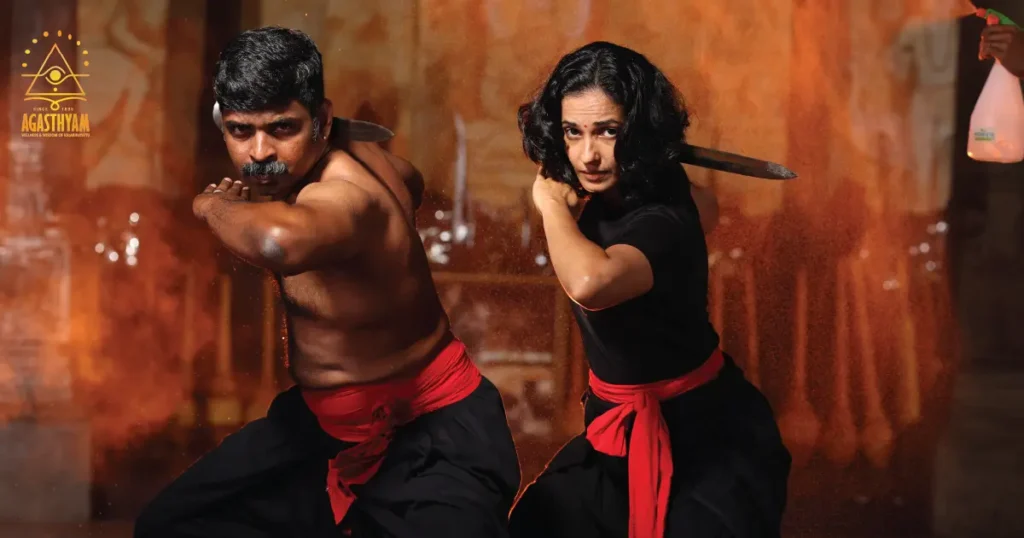
Innovation does not mean changing the foundation of the Kalari; it means finding new ways for ancient knowledge to serve today’s human being:
- Nalludal: A system of physical fitness and conditioning using traditional movements to develop strength, mobility, and stamina.
- Prana: Bringing greater attention to breath, movement, and vitality.
- Akam: Introducing meditation and inner awareness into the larger discipline of the warrior.
- Nithyam: Bringing the discipline of Kalari into everyday modern lifestyle practices.
- Shakthi: Making the strength and confidence of Kalari accessible to women through specialised online kalaripayattu classes women self defense classes and physical empowerment.
- Sampradayam: Creating a structured pathway for training the next generation of teachers.
Furthermore, through digital platforms, online instruction has extended the reach of the Guru, connecting students thousands of kilometres away with authentic guidance while preserving the core discipline of the art.
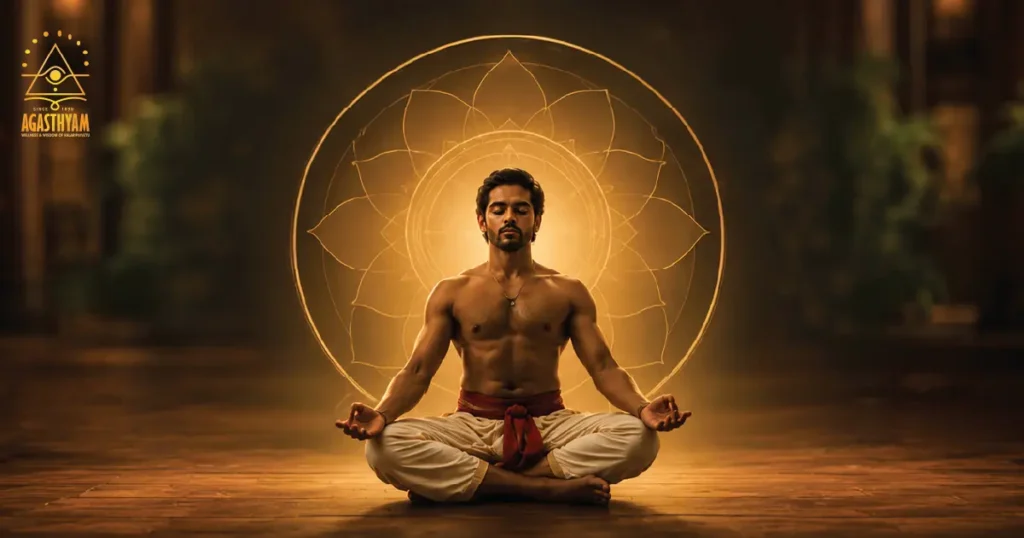
Warrior Yoga: The Missing Dimension
“अग्रतः चतुरो वेदाः… पृष्ठतः सशरं धनुः। इदं ब्राह्मम् इदं क्षात्रम्… शास्त्रादपि शरादपि॥”
In front… the four Vedas. Behind… the bow and arrow. This is Bharath’s ideal—guided by Shastra, protected by Śastra.
For nearly three decades, I have lived with two extraordinary traditions: Yoga and Kalaripayattu. One taught me silence; the other taught me readiness.
While yoga gives humanity the gift of inner stillness and self-awareness, modern life demands something more, courage, resilience, clarity, and the strength to protect what is right. The Yogi and the Warrior were never enemies; they completed one another.
Today, we introduce Warrior Yoga, not to replace yoga, but to reconnect us with a forgotten dimension. Yoga teaches us how to meet ourselves; Warrior Yoga teaches us how to meet the world with responsibility, discipline, compassion, and strength.
Whether you join a meditation and martial arts retreat, participate in an Indian martial arts retreat abroad, or simply begin your journey at the best kalaripayattu school in Kerala, our mission remains steadfast. We invite every practitioner to explore this journey with an open heart: to breathe like a yogi, to move like a warrior, and to live with Dharma.
– Gurukkal S. Mahesh