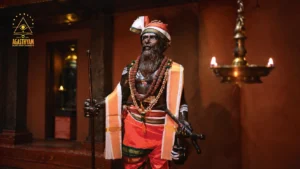
More than a martial arts teacher
When people see a Kalaripayattu master, they often see a martial arts teacher. But the traditional meaning of a Kalari Gurukkal goes much deeper.
A Gurukkal is a lineage holder. He stands within a living Guru Parampara, receiving knowledge from the Guru before him, practising it throughout his life, deepening it through experience, and passing it to the next generation. He does not own the tradition. He carries responsibility for it.
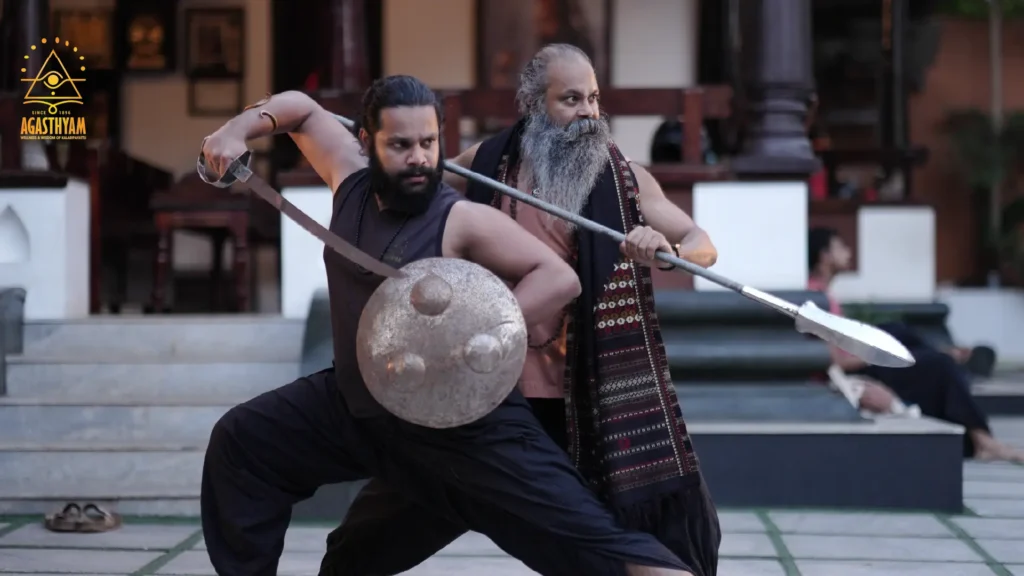
Kalari teachers vs the Kalaripayattu Gurukkal
Many Kalari teachers can teach a technique. A Kalaripayattu Gurukkal is expected to understand much more: the knowledge behind the technique, the discipline behind the practice, the tradition behind the knowledge, and the responsibility behind passing it on.
He is a teacher. A practitioner. A deep learner. A lineage holder. A custodian of knowledge.
The traditional Kalari was never only a place to learn fighting. It was a place of education. Students learned to stand, move, fall, recover, breathe, concentrate, handle weapons and understand the body. At deeper stages came Marma, healing, Yoga, breath practice, meditation and spiritual discipline.
So a Gurukkal’s knowledge cannot be measured by the number of techniques he can demonstrate. The real questions are: How much has he learnt? How deeply has he practised? How much does he understand? And how responsibly can he pass it on?
A Gurukkal is a deep learner
For a true Gurukkal, learning never ends. The teacher remains a student.
Every movement can be studied more deeply. Every weapon can reveal another dimension. Every student teaches the teacher something about the body and the learning process. Every generation raises new questions.
So a Gurukkal does not preserve knowledge mechanically. He studies it, lives it, reflects on it, and learns how to pass it on without losing its essence. Deep learning must come before deep teaching.
His authority comes not from age or title, but from a lifetime of practice, experience and responsibility.
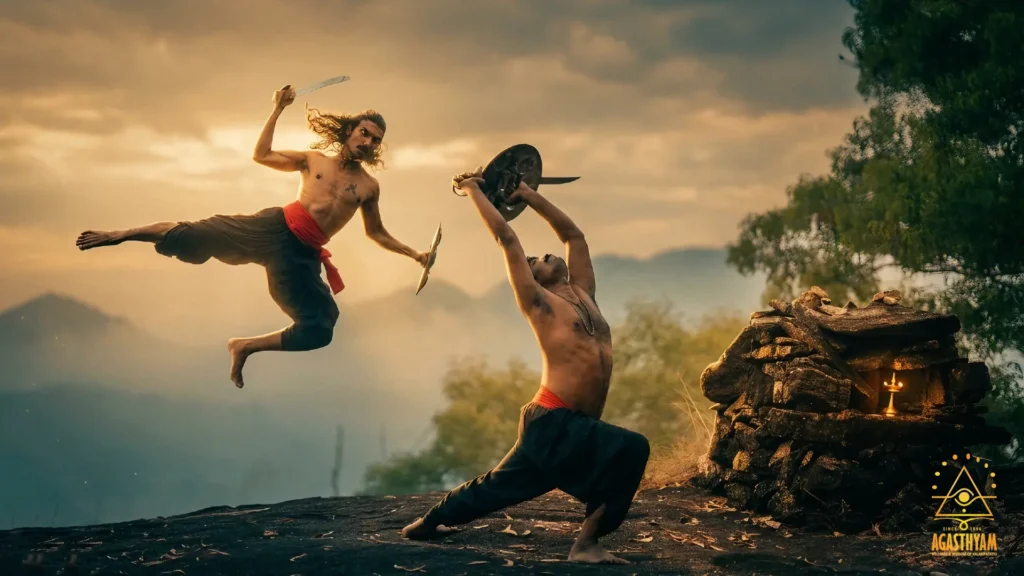
The Guru Parampara
A Gurukkal does not stand alone. Behind him stands his Guru, his Guru’s Guru, and the generations before them. This is Guru Parampara.
Knowledge survives because someone accepts the responsibility to receive it, practise it and transmit it. The Gurukkal becomes a living bridge, the past enters the present through him, and the present reaches the future through his students.
This is why lineage matters in Kalaripayattu. A lineage is not simply a family name. It is a chain of learning and responsibility. To hold a lineage is to carry what has been entrusted to you.
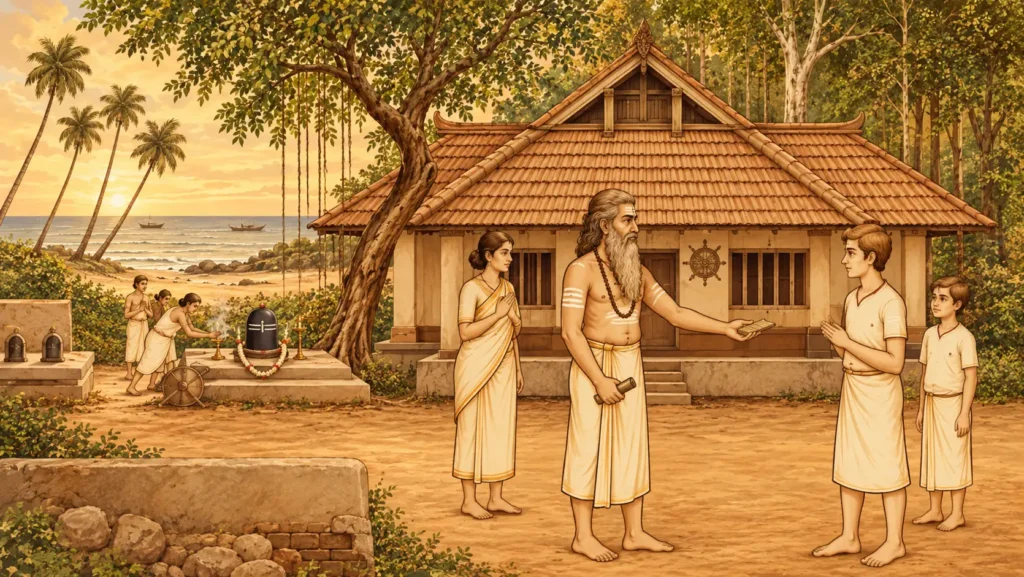
From warrior teacher to guardian of knowledge
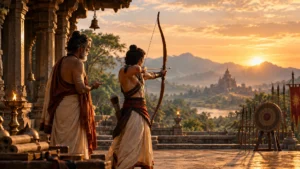
Historically, Kalaripayattu was closely tied to the preparation of warriors and the martial culture of Kerala’s kingdoms and communities. The Kalari was where courage, weapons, discipline and combat skill were cultivated.
But preparing a warrior took more than physical strength. The student needed discipline, speed, balance, awareness, courage, control, commitment to training and mastery over fear.
The Kalari Gurukkal shaped not just the fighter, but the character of the practitioner. The warrior had to learn when to use power, and when not to.
Power without discipline is dangerous. Power with discipline becomes responsibility.
The five dimensions of a Kalaripayattu Gurukkal
1. Foundation
Body conditioning, flexibility, strength, balance, agility, Meipayattu, Chuvadu, Vadivu, breath and coordination. The foundation is where the body is prepared to become an instrument of knowledge. A Gurukkal must know not only how to perform these practices, but how to develop them in another person.2. Weapons
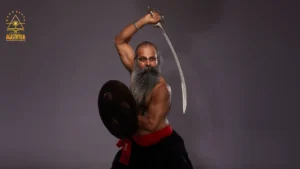
The student progresses from body to weapon, from movement to application. Traditional Kalaripayattu includes the staff, sword, shield, knife and more, with advanced traditions including the Urumi. Weapon mastery is not only technical. It demands timing, distance, precision, awareness and control. The Gurukkal teaches both the weapon and the discipline needed to hold that knowledge.3. Marma
At advanced levels, Kalari knowledge includes Marma, the understanding of the body’s vital points. It has a martial dimension. But the tradition goes further: the body must also be protected and restored. A Gurukkal learns to see the body not only as something that can fight, but as something to be understood and cared for.4. Healing
In the deeper Kalari tradition, the warrior and the healer are not separate identities. The same tradition that trains the body intensely also develops knowledge of recovery, bodywork and traditional healing. At Agasthyam Kalari in Thiruvananthapuram, this continues through the connection between Kalaripayattu, Marma, Siddha knowledge and traditional healing, which Gurukkal S. Mahesh describes as part of his family’s inherited tradition. Know how to build the body. Know how to challenge it. Know how to protect it. And know how to help restore it.5. Yoga and spirituality
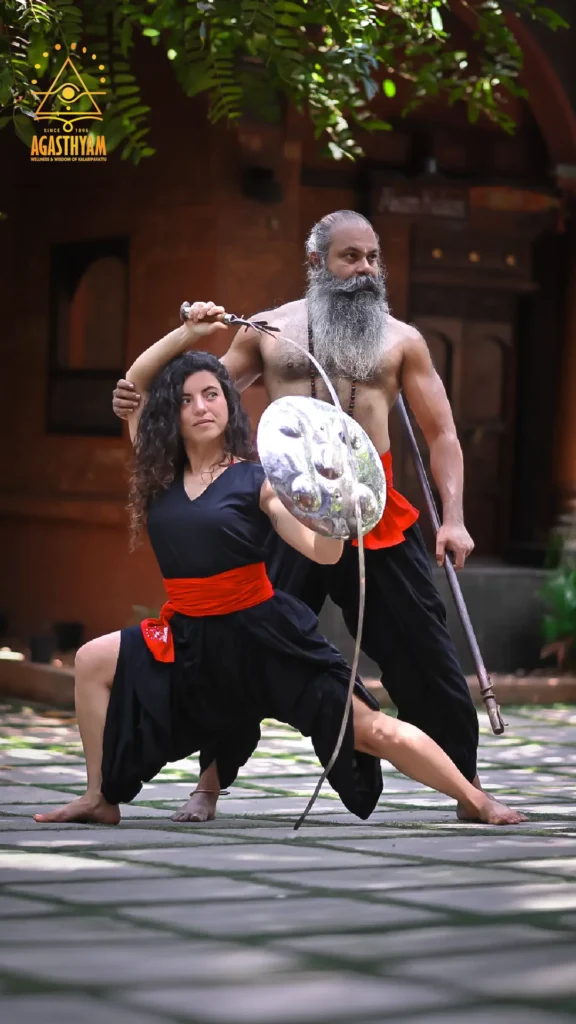
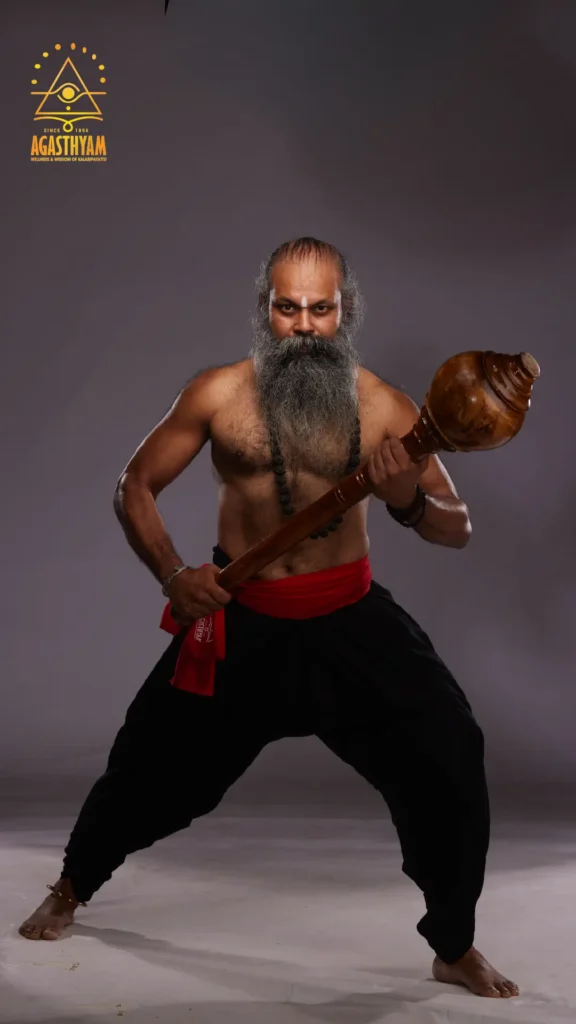
The Gurukkal reads the student
A Gurukkal does not teach every student the same way. He observes. He studies the body. He understands each student’s age, strength, limits, temperament and readiness.
He knows when to raise the intensity. When to correct. When the student is ready for the next stage.
A technique can be written down. The ability to understand another human being comes only through years of teaching.
The Gurukkal builds character
Kalaripayattu training is physical. Its deepest lessons are not.
The student learns discipline, patience, courage, humility, consistency, respect, awareness and self-control. The purpose is not aggression. It is controlled strength, the ability to stay steady under pressure. This is the foundation of the warrior spirit.
The Kalari is not a gym
A traditional Kalari is a place of learning, and the Guru–student relationship sits at its centre.
The student enters with humility. The Guru teaches with responsibility. The student practises. The Guru observes and corrects. Knowledge moves through direct experience, which is why Kalaripayattu cannot be understood through technique alone.
The Kalari teaches the body. The Guru teaches the way.
The modern Kalari Gurukkal
The world around Kalaripayattu has changed. Students now come from across India and the world to learn Kalaripayattu in Kerala, for martial arts, self-defence, fitness, Yoga, performance, research, wellness, or a deeper connection with Indian knowledge traditions.
So the modern Gurukkal’s responsibility is larger. He must keep the tradition authentic while making it accessible. Respect the Guru Parampara while understanding contemporary education. Create qualified Kalari teachers through structured Kalaripayattu teacher training, maintain standards, and make sure the tradition is never reduced to performance alone.
Gurukkal S. Mahesh: a contemporary lineage holder
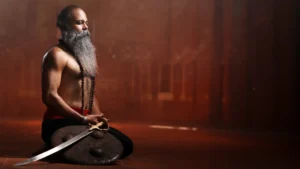
Gurukkal S. Mahesh is a fifth-generation hereditary Kalaripayattu Gurukkal and a lifelong practitioner and teacher of Kalaripayattu, Yoga, meditation and the Siddhar tradition.
For him, Kalaripayattu is not only a martial art. It is a way of understanding the human being. His work at Agasthyam brings together:
- Kalaripayattu and traditional weapons
- Marma and traditional healing
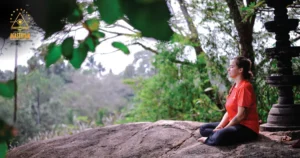
- Yoga and meditation
- The Siddhar tradition and spiritual practice
- Structured teacher training
Warrior Yoga is one contemporary expression of this philosophy, joining the dynamic discipline of Kalaripayattu with the inner discipline of Yoga.
For Gurukkal S. Mahesh, the warrior and the yogi are not opposites. They are two dimensions of mastery.
Strength outside. Stillness inside.
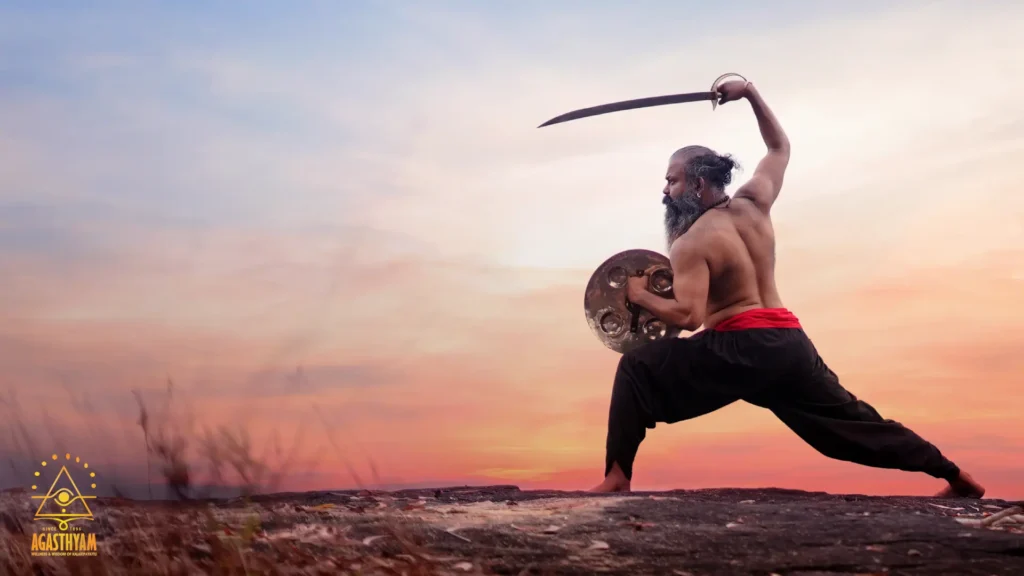
How to recognise the best Kalaripayattu teacher
A title alone does not make a Gurukkal. If you are searching for the best Kalaripayattu teacher, look beyond the techniques on display. Look for someone who continually cultivates:
- Deep learning and daily practice
- Knowledge of lineage
- A strong foundation
- Understanding of weapons
- Knowledge of Marma and healing
- Yoga and inner practice
- The ability to teach and to read each student
- Discipline, humility, character and responsibility
And above all, the willingness to keep learning. The moment a teacher believes there is nothing more to learn, the journey of the Gurukkal has stopped.
Custodian, not owner
This may be the most important distinction. A Gurukkal holds a lineage, but he does not own it. He is its custodian.
He receives knowledge from the past. He lives it in the present. He prepares students for the future. What was received must not be lost. What is understood must be transmitted. What is transmitted must be carried responsibly.
That is Guru Parampara.
The journey continues
A student may begin Kalaripayattu looking for strength. Then discover movement. Then discipline. Then weapons, Marma, healing, Yoga and meditation. And eventually realise the deepest journey was never about mastering an opponent.
It was about mastering oneself.
The battlefield has changed. The student has changed. Society has changed. But the Gurukkal’s core responsibility remains: to develop human beings through knowledge, discipline and practice.
He is the living link between generations. And when he teaches, he is not simply passing on techniques. He is passing on a way of living.
Gurukkal – not merely the one who teaches Kalaripayattu, but the one who carries the knowledge, lives the discipline, protects the lineage, and prepares the next generation to carry it forward.